
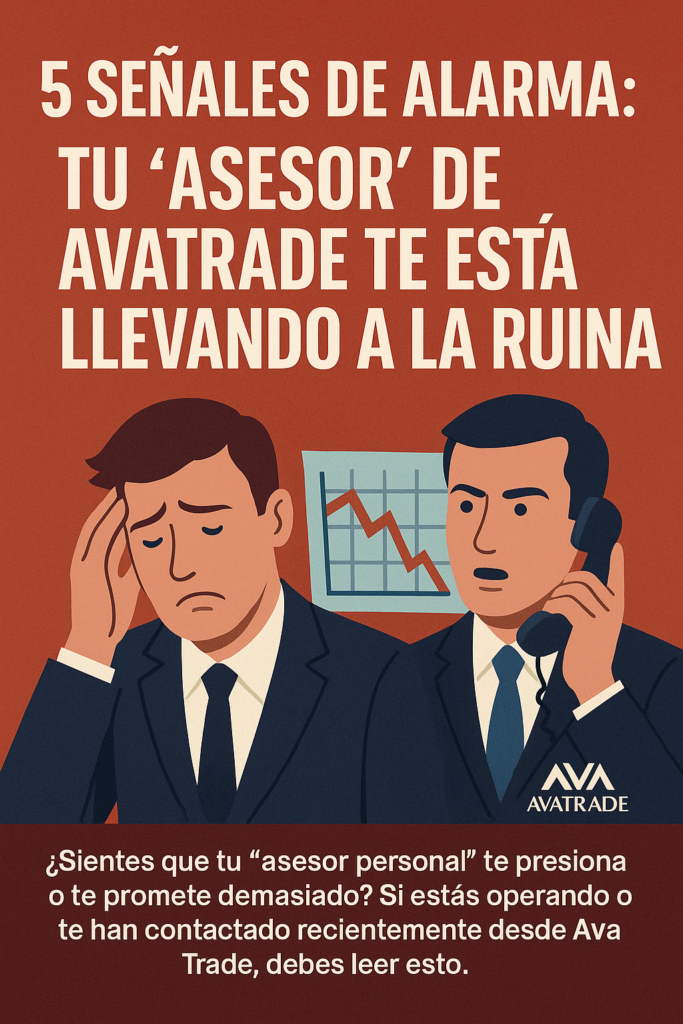
5 Señales de Alarma: Tu ‘Asesor’ de AvaTrade te Está Llevando a la Ruina
¿Sientes que tu «asesor personal» te presiona o te promete demasiado? Si estás operando o te han contactado recientemente desde AvaTrade, debes leer esto.
Asesor de AvaTrade
En la Plataforma de Afectados por AvaTrade, hemos recopilado cientos de testimonios que describen una y otra vez el mismo modus operandi. La estafa no empieza en el trading, sino en la relación de confianza que construyen contigo.
Tu dinero no se esfuma por mala suerte del mercado; se esfuma porque el bróker (que es un Market Maker) y su asesor tienen un incentivo directo en que tú pierdas. Tu pérdida es su ganancia.
Asesor de AvaTrade
Aquí están las 5 tácticas más comunes que usan para vaciar tu cuenta. Si reconoces alguna, actúa HOY mismo.
1. La Trampa de la Cuenta Demo «Infalible»
Lo que dice el asesor de avaTrade o AvaPartner : «Abre una cuenta demo sin riesgo y verás lo fácil que es ganar con nuestra ayuda.»
Asesor de AvaTrade
La realidad: Las cuentas demo suelen estar diseñadas para mostrar ganancias constantes y rápidas. El objetivo es que desarrolles una confianza ciega en el sistema y, sobre todo, en la capacidad de tu asesor. Una vez que has visto esos «beneficios» en el simulador, te sientes seguro para depositar dinero real.
💡 Si todo funcionaba perfectamente en la demo, ¿por qué los resultados se vuelven volátiles y negativos en la cuenta real? Pregúntale a tu asesor por qué no usan los mismos parámetros que te hicieron ganar antes. La respuesta es que la demo no estaba reflejando el mercado real.
2. La Presión Incesante para «Aumentar Capital»
Lo que dicen: «Tenemos una oportunidad única en el mercado ahora mismo. Pero para aprovecharla de verdad y conseguir un margen seguro, necesitas depositar más dinero.»
Asesor de AvaTrade
La realidad: Una vez que depositas tu dinero inicial (por ejemplo, 1.000€), el asesor sabe que no vale la pena arriesgarse a una gran operación suicida. Su objetivo es que metas más y más, hasta que el capital sea lo suficientemente grande para justificar el golpe final. Usan la excusa del «margen de seguridad» para hacerte creer que el dinero está protegido, cuando en realidad solo está esperando a ser puesto en riesgo. Asesor de AvaTrade
3. Ausencia Total de Herramientas de Protección (Stop Loss)
Lo que dicen: «No te preocupes por el Stop Loss, nosotros vigilamos tus operaciones 24/7. Lo cerraremos manualmente en el momento justo para maximizar el beneficio.»
La realidad: La falta de un Stop Loss es un indicador claro de que la intención no es gestionar el riesgo, sino dejar que las pérdidas se disparen hasta que la cuenta llegue a cero. Cuando esa operación «suicida» (con alto riesgo y gran apalancamiento) se ejecuta, el asesor desaparece o simplemente te llama para darte la noticia: todo se ha perdido.
Asesor de AvaTrade
4. La Promesa de «Información Privilegiada» o Exclusiva
Lo que dicen: «Soy un asesor senior y tengo acceso a información que el público general no tiene. Conmigo, estás operando con ventaja.»
La realidad: Nadie con información privilegiada real la comparte por teléfono con un cliente recién captado. Esta es una táctica emocional para que sientas que tienes un trato especial y que tu confianza está bien depositada. Cuidado cuando el asesor te empuja a un «evento» o «seminario» donde la única finalidad es que autorices o apruebes la próxima operación de riesgo.
5. Las Operaciones de «Calentamiento» al Inicio
Lo que dicen: «Mira qué fácil es ganar. En esta primera semana, haremos operaciones cortas con beneficios rápidos.»
La realidad: Al principio, te permiten ganar pequeñas cantidades y ver el saldo positivo. Este es el anzuelo. Se llama calentamiento y tiene dos objetivos:
Consolidar tu confianza en el asesor.
Hacerte creer que el trading es rápido, fácil y no requiere conocimientos.
Una vez convencido, es cuando te convencen de depositar la gran suma de dinero que será el objetivo final de la estafa.
🚫 ¿Qué hacer si has reconocido estas tácticas?
Si has reconocido estas señales, significa que estás en el camino de convertirte en una víctima más de AvaTrade.
No estás solo y aún puedes actuar.
Deja de depositar dinero inmediatamente.
Guarda toda la evidencia: Correos electrónicos, extractos de cuenta, grabaciones de las llamadas (si es legal en tu país), y nombres de los asesores.
Contáctanos. Somos una plataforma de afectados que hemos pasado por lo mismo. Podemos asesorarte gratuitamente y darte la oportunidad de unirte a nuestra Demanda Colectiva.
Juntos tenemos más fuerza y venceremos a esta estafa.
📞 [HAZ CLIC AQUÍ PARA CONTACTAR CON LA PLATAFORMA DE AFECTADOS POR AVATRADE] Teléfono: +34 636422877
Asesor de AvaTrade

¡Claro! Con gusto traduzco el artículo completo al inglés.
⚠️ 5 Warning Signs: Your AvaTrade ‘Advisor’ is Leading You to Ruin
Do you feel like your «personal advisor» is pressuring you or promising you too much? If you are trading or have been recently contacted by AvaTrade, you need to read this.
At the AvaTrade Victims Platform, we have compiled hundreds of testimonials that describe the same modus operandi over and over again. The scam doesn’t begin with trading, but with the relationship of trust they build with you.
Your money isn’t vanishing due to bad market luck; it’s vanishing because the broker (which is a Market Maker) and their advisor have a direct incentive for you to lose. Your loss is their gain.
Here are the 5 most common tactics they use to empty your account. If you recognize any of these, act TODAY.
1. The «Infallible» Demo Account Trap
What they say: «Open a risk-free demo account and you’ll see how easy it is to profit with our help.»
The reality: Demo accounts are often designed to show consistent and quick profits. The goal is for you to develop blind trust in the system and, above all, in your advisor’s capabilities. Once you’ve seen those «profits» in the simulator, you feel safe depositing real money.
💡 If everything worked perfectly in the demo, why do the results become volatile and negative in the real account? Ask your advisor why they aren’t using the same parameters that helped you win before. The answer is that the demo was not reflecting the real market.
2. The Incessant Pressure to «Increase Capital»
What they say: «We have a unique opportunity in the market right now. But to really take advantage of it and get a secure margin, you need to deposit more money.»
The reality: Once you deposit your initial money (e.g., €1,000), the advisor knows it’s not worth risking a major suicide trade yet. Their goal is for you to deposit more and more, until the capital is large enough to justify the final blow. They use the excuse of a «safety margin» to make you believe the money is protected, when in reality, it’s just waiting to be put at risk.
3. Total Absence of Protection Tools (Stop Loss)
What they say: «Don’t worry about the Stop Loss, we monitor your trades 24/7. We will close it manually at the perfect time to maximize profit.»
The reality: The lack of a Stop Loss is a clear indicator that the intention is not to manage risk, but to let the losses soar until the account hits zero. When that «suicide trade» (with high risk and great leverage) is executed, the advisor disappears or simply calls you to deliver the news: everything is lost.
4. The Promise of «Insider» or Exclusive Information
What they say: «I am a senior advisor and I have access to information that the general public doesn’t. With me, you are trading with an advantage.»
The reality: No one with real insider information shares it over the phone with a newly acquired client. This is an emotional tactic to make you feel like you have special treatment and that your trust is well placed. Be careful when the advisor pushes you toward an «event» or «seminar» where the sole purpose is for you to authorize or approve the next risky operation.
5. The Initial «Warm-Up» Trades
What they say: «Look how easy it is to win. In this first week, we’ll make short trades with quick profits.»
The reality: At first, they allow you to win small amounts and see a positive balance. This is the hook. It’s called a warm-up and has two objectives:
To solidify your confidence in the advisor.
To make you believe that trading is quick, easy, and requires no knowledge.
Once convinced, that’s when they persuade you to deposit the large sum of money which will be the final target of the scam.
🚫 What to Do If You Recognize These Tactics?
If you have recognized these signs, it means you are on the path to becoming another AvaTrade victim.
You are not alone and you can still act.
Stop depositing money immediately.
Save all evidence: Emails, account statements, call recordings (if legal in your country), and names of the advisors.
Contact us. We are a platform of victims who have been through the same thing. We can advise you for free and give you the opportunity to join our Class Action Lawsuit.
Together we are stronger and we will overcome this scam.